
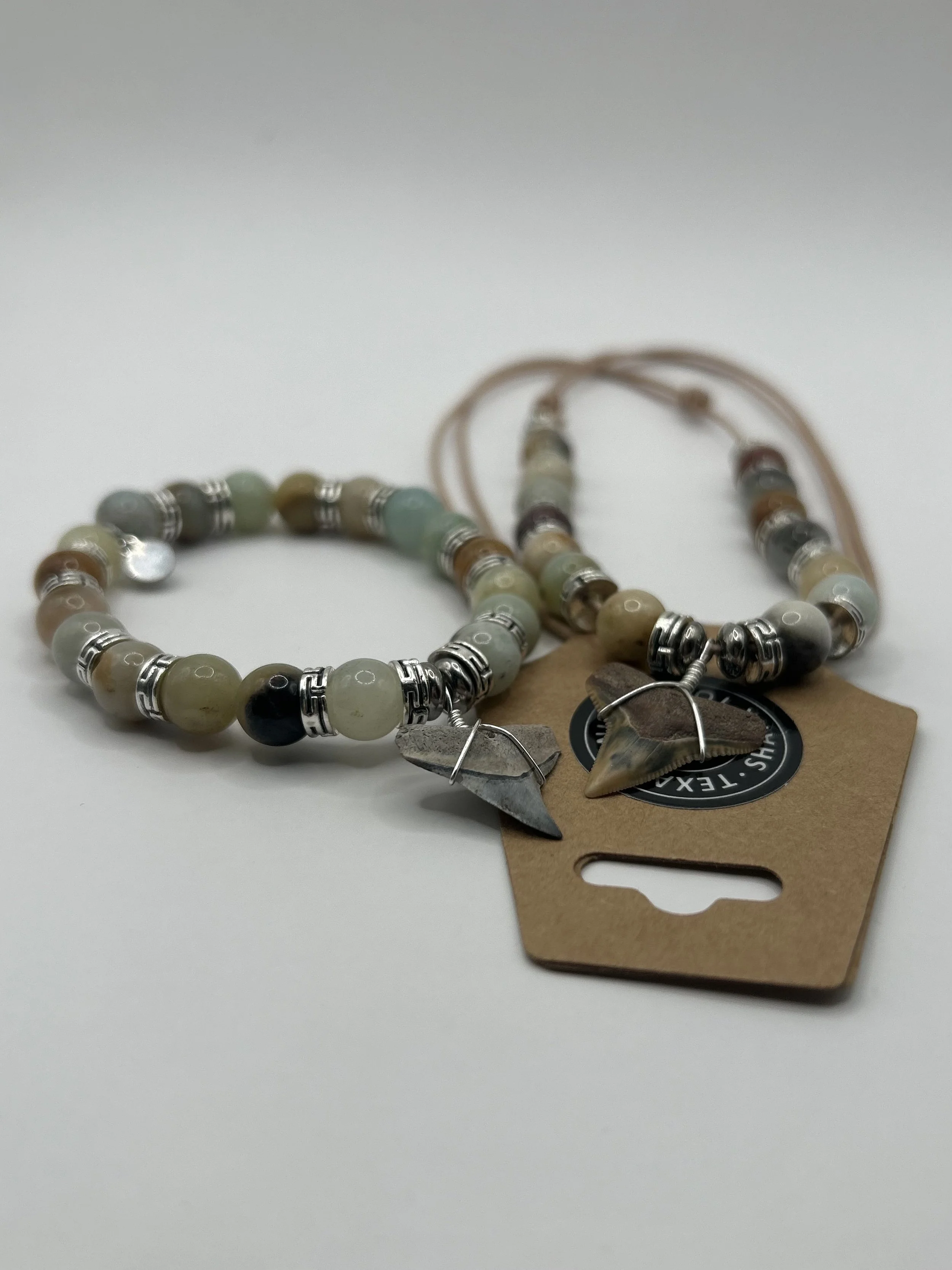
Amazonite is a green to blue‑green variety of microcline feldspar, a potassium‑rich tectosilicate mineral prized for its soothing hues. Its color ranges from pale, almost minty green to deep teal and is caused primarily by trace amounts of lead and water within the mineral’s structure, sometimes producing subtle tonal variations across a single piece. The stone typically exhibits a vitreous to pearly luster and can range from translucent to opaque, offering a pleasing visual depth when polished.
Physical properties Hardness: Mohs 6–6.5 — durable enough for many types of jewelry but softer than quartz; it takes wear well in protected settings but requires mindful handling to avoid scratches and chips. Cleavage and fracture: Sensitive to cleavage in two directions; can fracture conchoidally, so care is needed when cutting and setting. Habit: Often occurs in massive to granular forms; when crystals appear they tend to be tabular or blocky, and larger pieces may show patchy color zoning. Optical effects: May show white streaks, inclusions, and occasional veining, and can display subtle chatoyancy or micro‑pleochroism depending on internal structure and orientation, adding to its visual interest.
Sources Notable localities include the Ilmen Mountains of Russia, Colorado and Virginia (USA), Madagascar, and Brazil, each producing material with slightly different tones and textures prized by lapidaries.
Care and handling Avoid prolonged exposure to intense heat, prolonged strong light, or harsh chemical cleaners, which can alter color or surface quality. Clean with mild soap and lukewarm water and a soft cloth; do not use ultrasonic cleaners or expose to high heat. Store amazonite separately from harder gems to prevent abrasion, and consider protective settings to guard against impact and cleavage damage.
Lapidary uses Commonly cut into cabochons, beads, and polished slabs. Its attractive color range and workable hardness make it popular for pendants, earrings, and beads, though settings that protect edges and cleavage planes are advisable. Larger slabs are often used for decorative inlays or statement pieces where the stone’s natural patterns can be showcased.
Historical and cultural notes Amazonite appears in ancient Egyptian jewelry and amulets, where it was valued for both its color and symbolic associations. In modern metaphysical contexts it is often linked with soothing, balancing, and calming properties, and continues to be favored for jewelry intended to convey a sense of tranquility.
